+880 1745-989313
Posted On: 11 Jul 2026By: Admin
Concrete structures derive their strength not only from high-quality concrete but also from the proper placement and inspection of reinforcement steel. Reinforcement inspection is one of the most critical stages of construction because any mistake before concrete pouring becomes extremely difficult and costly to correct afterward.
A well-executed reinforcement inspection ensures structural safety, long-term durability, and compliance with engineering standards. This guide outlines the essential reinforcement quality checks every site engineer, contractor, and quality control professional should perform before concrete placement.
Reinforcement bars carry tensile forces within reinforced concrete structures. Incorrect bar placement, insufficient concrete cover, improper lap lengths, or poor binding can significantly reduce the structural capacity and service life of a building.
Proper inspection helps to:
Improve structural safety
Prevent construction defects
Reduce maintenance costs
Increase durability
Ensure compliance with approved structural drawings and design codes
Achieve high-quality concrete work
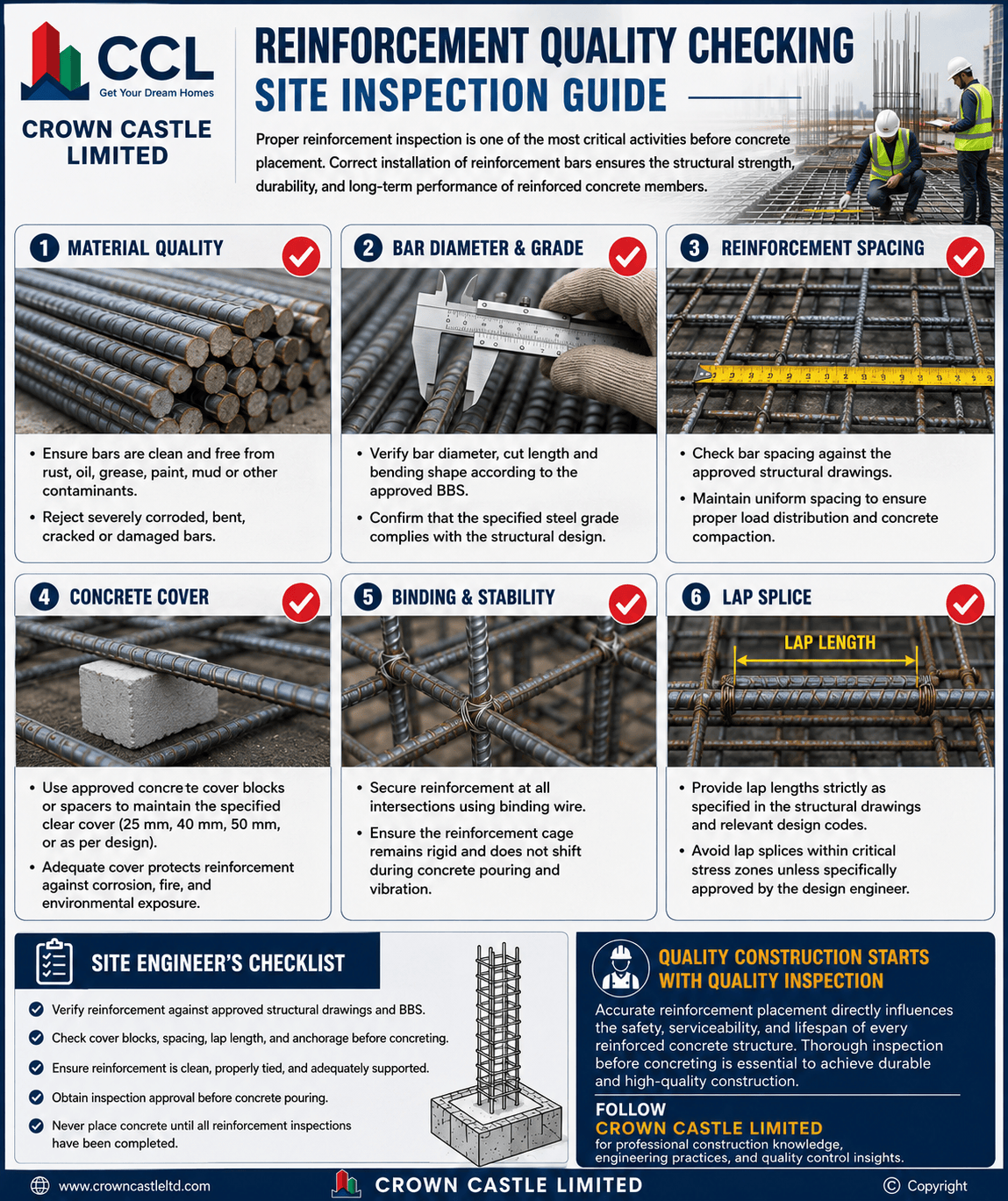
The first step is verifying the quality of reinforcement bars.
Site engineers should ensure that:
Reinforcement bars are free from excessive rust.
No oil, grease, paint, mud, or loose scales are present.
Bars are not bent, cracked, or mechanically damaged.
Steel supplied matches the approved project specifications.
Only approved materials should be used in construction.
Before installation, reinforcement must be checked against the approved Bar Bending Schedule (BBS).
Inspection includes:
Bar diameter
Cut length
Bending shape
Steel grade
Quantity of reinforcement
Any deviation from the approved drawings must be corrected before concreting.
Proper spacing allows concrete to flow easily around reinforcement and ensures effective load transfer.
During inspection:
Compare spacing with structural drawings.
Maintain uniform center-to-center spacing.
Ensure bars are properly aligned.
Avoid congestion that may prevent proper concrete compaction.
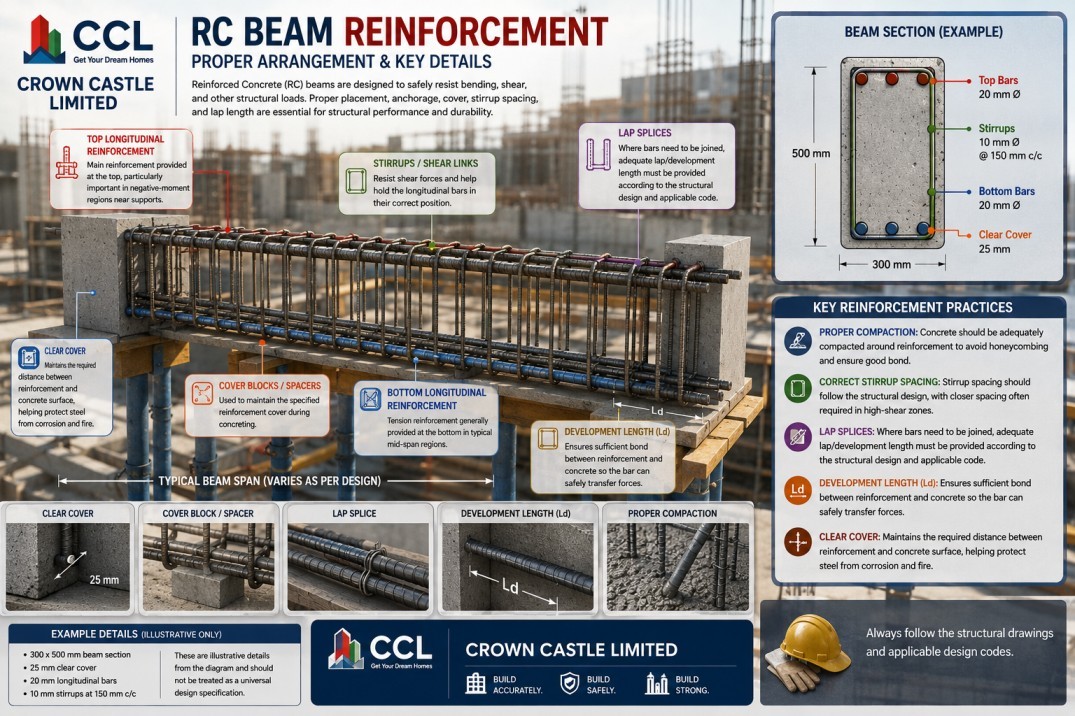
Concrete cover protects reinforcement from corrosion, moisture, chemicals, and fire.
Use approved cover blocks or spacers to maintain the specified cover according to design requirements, such as:
25 mm
40 mm
50 mm
Or as specified in structural drawings
Incorrect cover is one of the most common causes of reinforcement corrosion.
Proper binding keeps reinforcement in its correct position during concrete placement.
Inspection should confirm:
Binding wire is securely tied at all intersections.
Reinforcement cages are rigid and stable.
Chairs and spacers are properly installed.
Bars will not move during vibration or concrete pouring.
Lap splices must comply with structural drawings and relevant design codes.
Inspect for:
Correct lap length
Proper splice locations
Adequate staggered laps where required
Avoidance of lap splices in critical stress zones unless approved by the structural engineer
Proper lap splicing ensures effective load transfer between reinforcement bars.
Before concrete pouring, verify the following:
✔ Reinforcement matches approved structural drawings.
✔ Bar Bending Schedule (BBS) is correctly followed.
✔ Bar diameter and steel grade are correct.
✔ Reinforcement spacing is accurate.
✔ Concrete cover is properly maintained.
✔ Cover blocks and spacers are correctly placed.
✔ Reinforcement is securely tied.
✔ Lap lengths comply with design requirements.
✔ Reinforcement cage is stable.
✔ Inspection approval has been obtained before concrete placement.
Some of the most frequent reinforcement errors include:
Using incorrect bar diameters
Inadequate concrete cover
Poor reinforcement binding
Incorrect lap splice lengths
Missing reinforcement bars
Congested reinforcement preventing concrete compaction
Concrete poured before final inspection
Avoiding these mistakes significantly improves construction quality.
To achieve durable and safe reinforced concrete structures:
Follow approved structural drawings.
Use only certified reinforcement materials.
Maintain proper concrete cover.
Follow the approved Bar Bending Schedule (BBS).
Perform detailed inspections before every concrete pour.
Ensure all reinforcement work is approved by the responsible engineer.
Reinforcement quality inspection is a fundamental part of successful construction. Careful verification of material quality, reinforcement placement, spacing, concrete cover, binding, and lap splices ensures that reinforced concrete members perform as intended throughout their service life.
At Crown Castle Limited, quality is built into every stage of construction. Through strict engineering supervision, adherence to structural standards, and comprehensive quality control practices, we are committed to delivering safe, durable, and reliable structures that stand the test of time.
Crown Castle Limited
Get Your Dream Homes
Building Trust Through Quality Construction.