+880 1745-989313
Posted On: 02 Jul 2026By: Admin
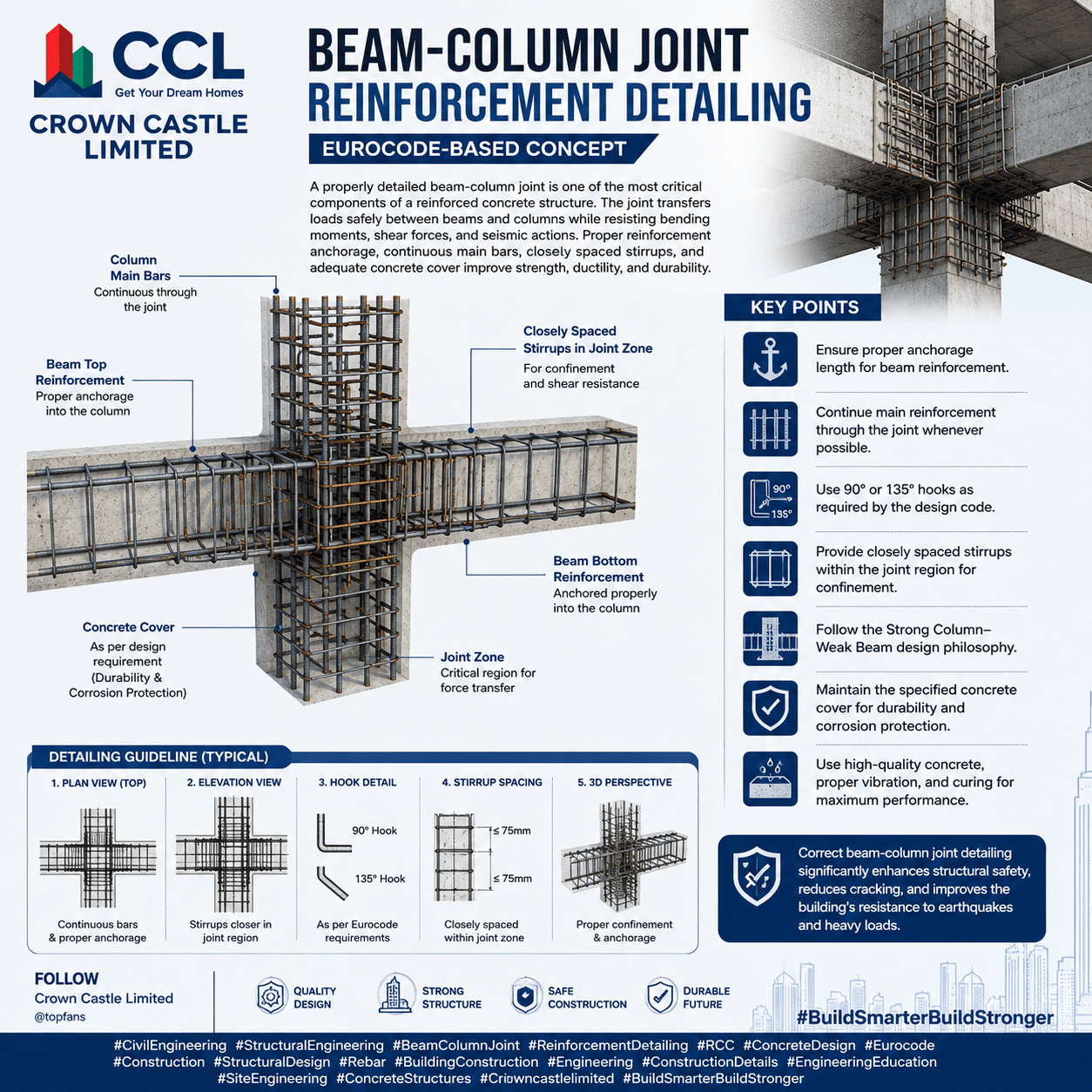
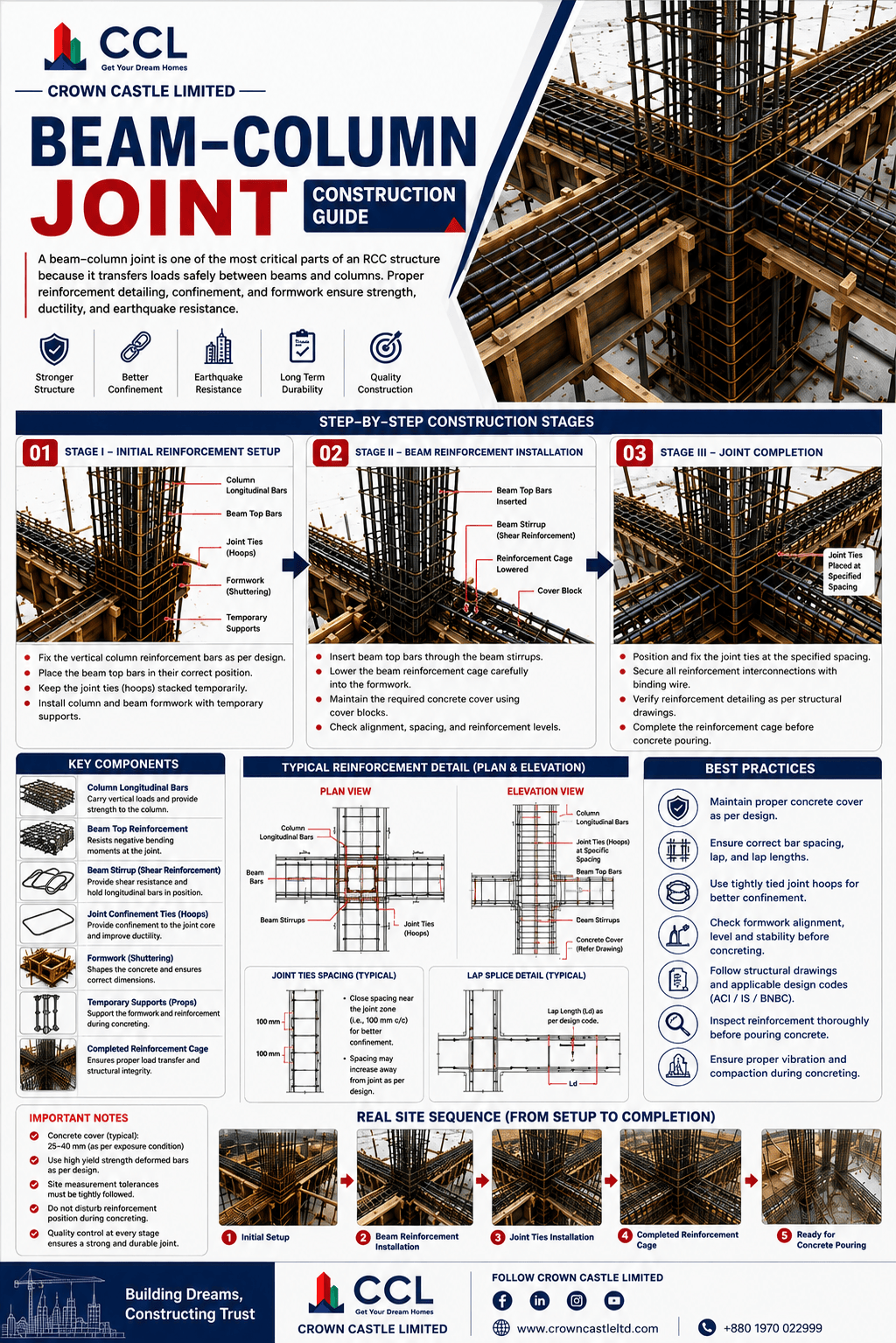
In reinforced concrete construction, the beam–column joint is one of the most critical structural zones because it serves as the connection point where loads from slabs and beams are transferred safely to the columns and eventually to the foundation. The strength, stability, and earthquake resistance of an entire building largely depend on the proper detailing and execution of these joints.
A well-constructed beam–column joint ensures:
✅ Efficient load transfer between structural members
✅ Improved ductility and seismic performance
✅ Better confinement of concrete in highly stressed zones
✅ Reduced risk of cracking and structural failure
✅ Enhanced durability and long-term service life of the building
The process begins with fixing the vertical column reinforcement bars according to the approved structural drawings. Beam top reinforcement bars are then positioned correctly while joint confinement ties (hoops) are kept ready for installation. At this stage, beam and column formwork is erected with temporary supports to maintain stability during reinforcement fixing and concreting.
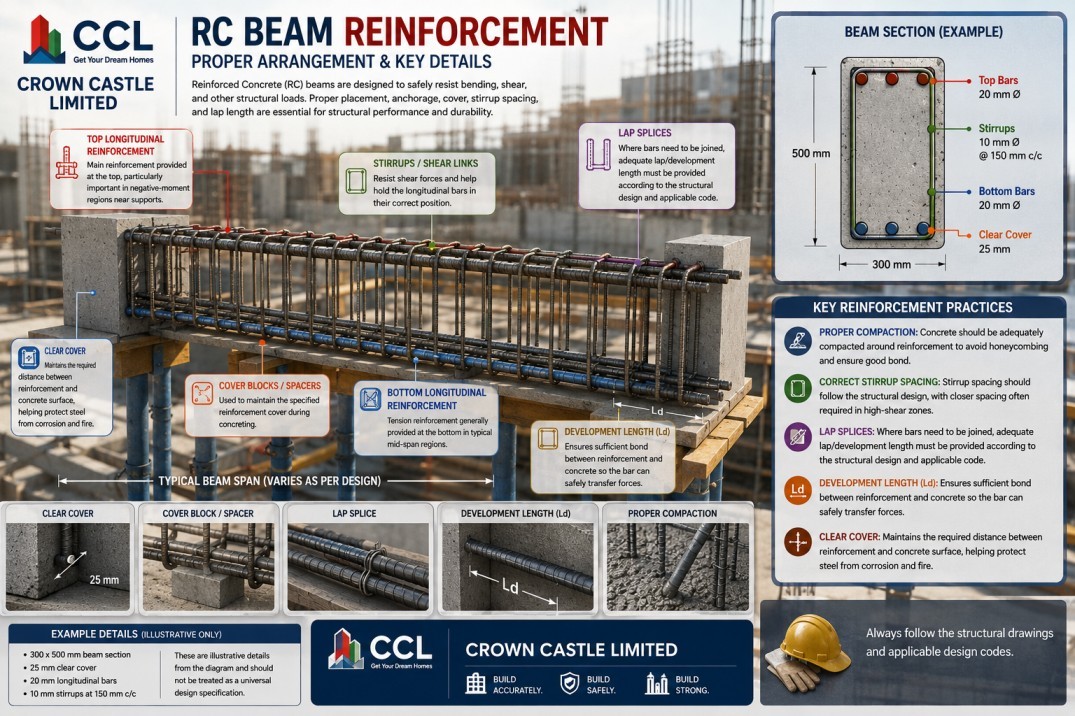
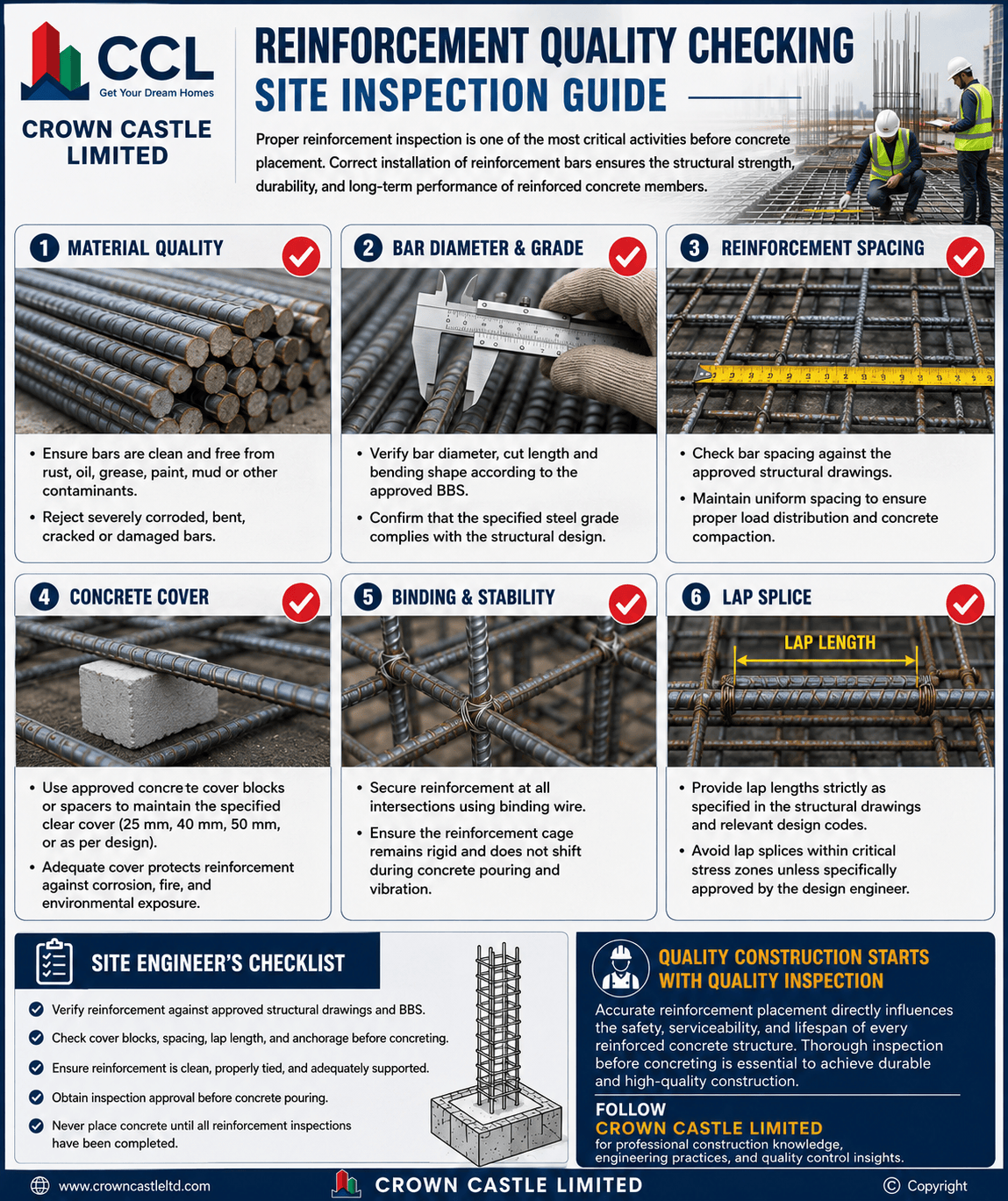
Beam top bars are threaded through the beam stirrups, and the reinforcement cage is carefully lowered into position. Proper concrete cover is maintained using cover blocks to protect reinforcement from corrosion and fire damage. Engineers verify bar spacing, alignment, anchorage lengths, and reinforcement levels to ensure compliance with design requirements.
Joint ties are installed at the specified spacing to provide confinement and improve ductility, especially in seismic zones. All reinforcement intersections are securely tied using binding wire, and the entire reinforcement assembly is checked against structural drawings before concrete pouring begins.
✔ Column Longitudinal Reinforcement
✔ Beam Top Reinforcement
✔ Beam Stirrups (Shear Reinforcement)
✔ Joint Confinement Ties (Hoops)
✔ Formwork (Shuttering)
✔ Temporary Supports and Props
✔ Completed Reinforcement Cage
• Maintain the specified concrete cover throughout the joint zone.
• Ensure correct bar spacing, development length, and lap splice length.
• Use closely spaced joint hoops for effective confinement.
• Verify formwork alignment and dimensional accuracy before concreting.
• Conduct detailed reinforcement inspections prior to pouring concrete.
• Follow approved structural drawings and applicable building codes such as BNBC, ACI, and IS standards.
• Ensure proper vibration and compaction during concreting to eliminate voids and honeycombing.
At Crown Castle Limited, every structural element is executed with precision engineering, strict quality control, and adherence to international construction standards to deliver buildings that are safe, durable, and built to last for generations.
Building Dreams, Constructing Trust.
#CCLEngineering #BeamColumnJoint #RCC #StructuralEngineering #CivilEngineering #Construction #Concrete #Rebar #SteelFixing #Formwork #BuildingConstruction #SiteEngineering #EngineeringEducation #QualityConstruction #EarthquakeResistantDesign #BuildingDesign #ConstructionManagement #CrownCastleLimited #EngineeringExcellence #BuildingDreamsConstructingTrust